
Sports
Renee Montgomery’s Move From Player to Owner
By Katherine Langford
Advertisement · Why this ad?
Katherine oversees editorial operations across all six brands. Before joining The Meridan Group, she spent 14 years at the Minneapolis Star Tribune, where she led the metro desk through its digital transformation. She holds a Master's in Journalism from Northwestern's Medill School.
More from Katherine →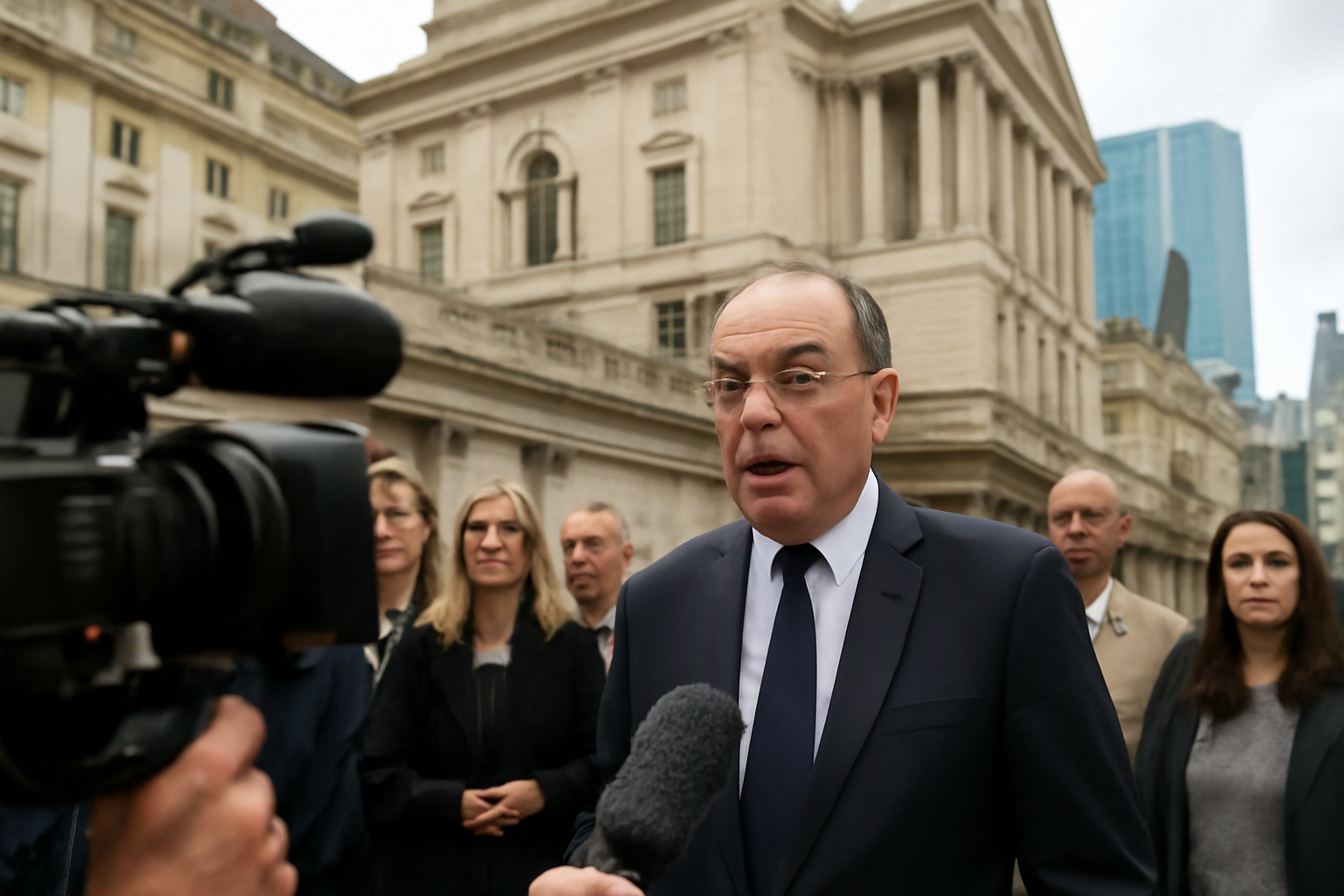
On a brisk morning in London, the atmosphere was charged with anticipation as the Bank of England (BOE) convened for a pivotal meeting. The stakes were high, with inflation concerns looming large over the UK economy. Governor Andrew Bailey, flanked by his fellow policymakers, prepared to deliver news that would reverberate not just through the financial markets but also across households and businesses in the United Kingdom and beyond.
In a unanimous decision, the BOE announced a significant increase in interest rates, a move that reflects the central bank's growing concern over inflation, which is projected to approach 5% by next year. This decision, made on [insert specific date], marks a critical juncture in the BOE's monetary policy as it seeks to curb rising prices while supporting economic recovery.
The central bank's action has sent ripples through the financial markets, with traders now intensifying their bets on further rate hikes in the coming months. The immediate reaction was one of volatility, as investors adjusted their strategies in response to the BOE's guidance.
Governor Bailey emphasized the necessity of these measures during a press conference that followed the announcement. He stated, "Our primary goal is to maintain price stability, and while we acknowledge the challenges that come with raising rates, we believe this is a necessary step to safeguard the economy's long-term health." His remarks underscored the delicate balance the BOE must navigate as it aims to foster both growth and stability.
The implications of the BOE's decision extend far beyond the financial markets. For households, higher interest rates typically mean increased costs for mortgages and loans, which can strain family budgets. As families grapple with rising living costs, the prospect of higher borrowing costs adds another layer of complexity to their financial planning.
Business owners, too, are feeling the pressure. Many small enterprises rely on loans to finance their operations and growth. An increase in interest rates could lead to higher expenses, potentially stifling investment and hiring. Local chambers of commerce are already voicing concerns about how these changes will affect the economic landscape, particularly in communities that are still recovering from the impacts of the pandemic.
To better understand the local impact, we spoke with several residents and business owners. Sarah Thompson, a mother of two from East London, expressed her worries: "With everything else going up, I can't afford to pay more for our mortgage. It's a tough situation for families like mine." Meanwhile, James Patel, who runs a small café, noted, "If my loan payments go up, I might have to reconsider my hiring plans. This could really hurt small businesses that are just getting back on their feet."
Additionally, local community organizations are stepping in to provide support. The East London Community Foundation has launched initiatives to help families manage their finances in light of rising costs. They offer workshops on budgeting and financial literacy, aiming to equip residents with the tools they need to navigate these challenging times. “We want to empower our community to make informed decisions,” said executive director Clara Mendez.
Moreover, the impact of rising interest rates is being felt across various demographic groups. For instance, single-parent households, which often operate on tighter budgets, are particularly vulnerable. Local advocacy groups are calling for more targeted support to assist these families as they face the dual pressures of higher living costs and increased borrowing expenses.
The financial markets reacted swiftly to the BOE's announcement. Stock prices fluctuated as investors recalibrated their expectations for future growth. Analysts predict that sectors sensitive to interest rates, such as real estate and consumer goods, may experience increased volatility in the coming weeks.
Market analysts at [insert reputable financial institution] suggest that while the immediate reaction is one of caution, the long-term outlook remains positive, contingent on how effectively the BOE can manage inflation without derailing economic recovery. "The BOE's commitment to tackling inflation is commendable, but it must be balanced with the need for sustained growth," noted chief economist [insert name].
In the wake of the announcement, financial analysts are closely monitoring the UK’s consumer confidence index, which has shown signs of weakening in recent months. A decline in consumer sentiment could lead to reduced spending, further complicating the economic landscape. “If people are worried about their financial future, they are less likely to spend, which could slow down recovery,” warned financial analyst Rachel Greene.
Additionally, the reaction from international markets has been noteworthy. Investors worldwide are keenly observing the BOE's moves, as they can have far-reaching implications for global economic stability. Currency fluctuations, particularly in the GBP/USD exchange rate, have already shown signs of volatility, reflecting the interconnectedness of today’s financial systems.
As the BOE prepares for its next meeting, scheduled for [insert next meeting date], all eyes will be on how policymakers respond to evolving economic indicators. The central bank's future decisions will likely hinge on inflation data, employment figures, and overall economic performance.
In the coming weeks, the BOE will face mounting pressure to communicate its strategy clearly to the public and financial markets. Transparency will be crucial in maintaining confidence among consumers and investors alike. The BOE’s next steps will be closely monitored, as they will play a significant role in shaping the economic landscape for families and businesses across the UK.
Moreover, community leaders and local policymakers are advocating for measures that can cushion the impact of rising interest rates. Initiatives such as temporary financial assistance for low-income families and incentives for small businesses could be on the table as local governments strive to mitigate the effects of the BOE's decisions.
As discussions unfold, local councils in London are considering forming task forces dedicated to monitoring the economic impact of interest rate changes. These task forces would involve collaboration between government officials, financial experts, and community representatives to ensure that the needs of residents are heard and addressed.
In conclusion, the BOE's recent decision to raise interest rates is a reflection of the complex challenges facing the UK economy. As inflation looms and market reactions unfold, the impact on everyday lives will be profound. Policymakers must navigate these waters carefully, ensuring that their actions promote stability and growth for all. As the community rallies to support one another, the collective resilience of Londoners will be tested, and the outcomes of these economic decisions will shape the future of the city.
By Katherine Langford

By Katherine Langford

By Marcus Chen

By Katherine Langford